[et_pb_section fb_built=”1″ _builder_version=”4.23.4″ _module_preset=”default” global_colors_info=”{}”][et_pb_row _builder_version=”4.23.4″ _module_preset=”default” global_colors_info=”{}”][et_pb_column type=”4_4″ _builder_version=”4.23.4″ _module_preset=”default” global_colors_info=”{}”][et_pb_post_title meta=”off” _builder_version=”4.23.4″ _module_preset=”default” hover_enabled=”0″ global_colors_info=”{}” sticky_enabled=”0″][/et_pb_post_title][et_pb_text _builder_version=”4.27.4″ _module_preset=”default” hover_enabled=”0″ global_colors_info=”{}” sticky_enabled=”0″]
Why Your Dishwasher Might Be Leaving Dishes Dirty
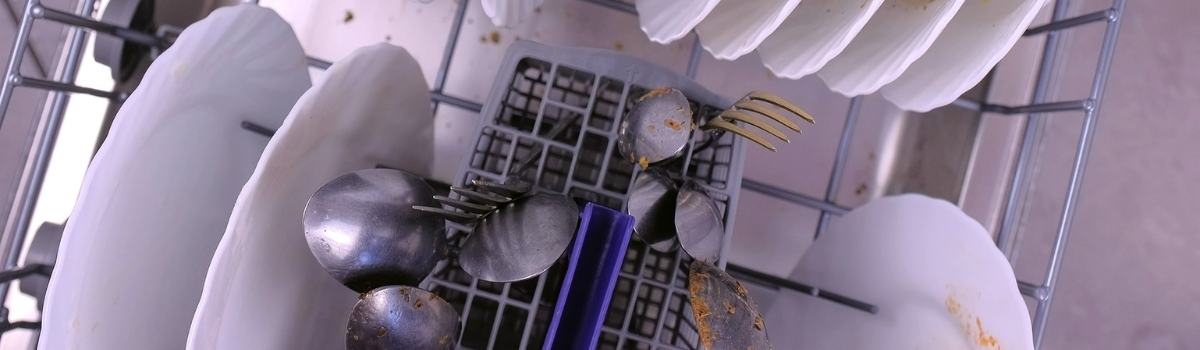
Imagine loading up your dishwasher after a long day, looking forward to clean, sparkling dishes only to discover bits of food, grease, or a cloudy residue clinging to your plates and glasses. It’s frustrating, right? For many households, this scenario is all too common. A dishwasher that doesn’t clean effectively can feel more of a burden than a convenience, forcing you to rewash dishes by hand or run additional cycles. Repair cost is another factor to consider if your dishwasher is malfunctioning, as fixing it can add up quickly. Beyond the inconvenience, this issue can lead to higher water and energy bills, wasted detergent, and even hygiene concerns.
The good news? Most dishwasher problems that leave dishes dirty are easy to fix. Whether you’re using a high-end model or a budget-friendly dishwasher, simple adjustments or minor maintenance can usually get things running smoothly without much trouble. Let’s go through the common reasons behind this problem and how to solve them.
Understanding Why This Happens
Dishwashers are designed to simplify life by taking over one of the most tedious chores in the kitchen. But when things go wrong, it’s often because of overlooked habits or maintenance issues.
Here’s why your dishwasher might not be delivering the results you expect.
Overloading the Dishwasher
Your dishwasher uses water spraying freely around the interior to clean dishes thoroughly. When the machine is overloaded, plates, bowls, and utensils block water flow, preventing detergent and rinse water from reaching all surfaces. This leads to partially cleaned items or dishes that feel gritty.
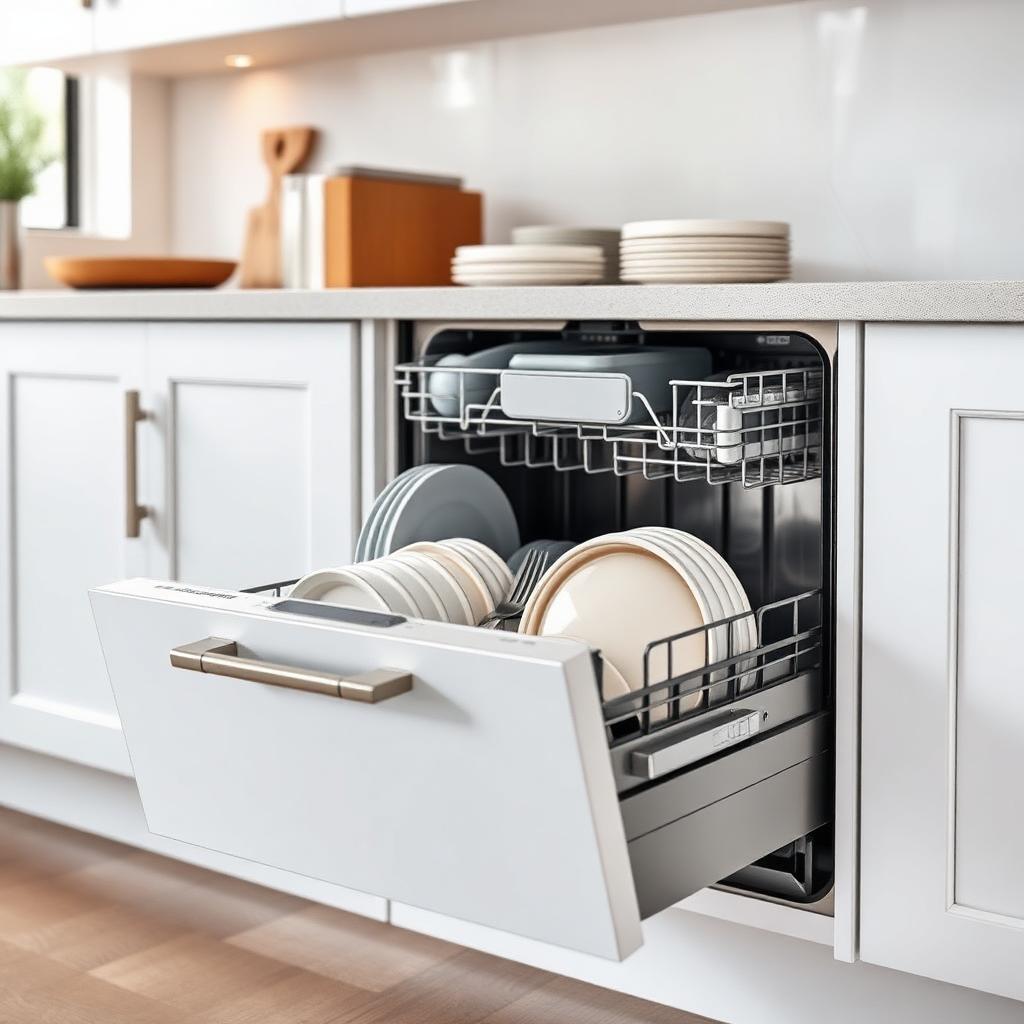
The fix? Avoid cramming too many items into the dishwasher at once. Place plates and bowls in separate rows, facing inward, with enough space between them. Utensils should go into their designated basket with handles down and large items like pots and pans should be strategically placed to avoid obstructing the spray arms.
Improper Loading Techniques
Even if your dishwasher isn’t overloaded, poorly arranged dishes can cause cleaning issues. For example, stacking bowls upside down can trap water, while leaning large items like cutting boards against the back wall can block detergent dispensers. Plates that overlap may also remain dirty because water and detergent can’t reach between them.
To avoid these issues, follow the recommended loading pattern in your dishwasher manual. Place large, flat items along the sides or back to prevent blocking spray arms, and keep glasses and smaller items on the top rack.
Clogged Spray Arms
Spray arms are the unsung heroes of your dishwasher. These rotating arms shoot water at high pressure to remove food and grease from your dishes. When the spray arm nozzles are blocked by food particles, soap residue, or mineral buildup, the water pressure weakens, and dishes come out dirty.
Regularly inspect your spray arms for visible debris. To clean them, remove the arms, rinse them under running water, and use a small brush or toothpick to unclog the nozzles. Once cleaned, reattach them securely to ensure proper rotation.
Dirty Filters
Your dishwasher filter is designed to catch leftover food particles during the wash cycle. Over time, these particles can accumulate and clog the filter, causing water to backwash onto your dishes. A dirty filter can also contribute to unpleasant odours inside the machine.
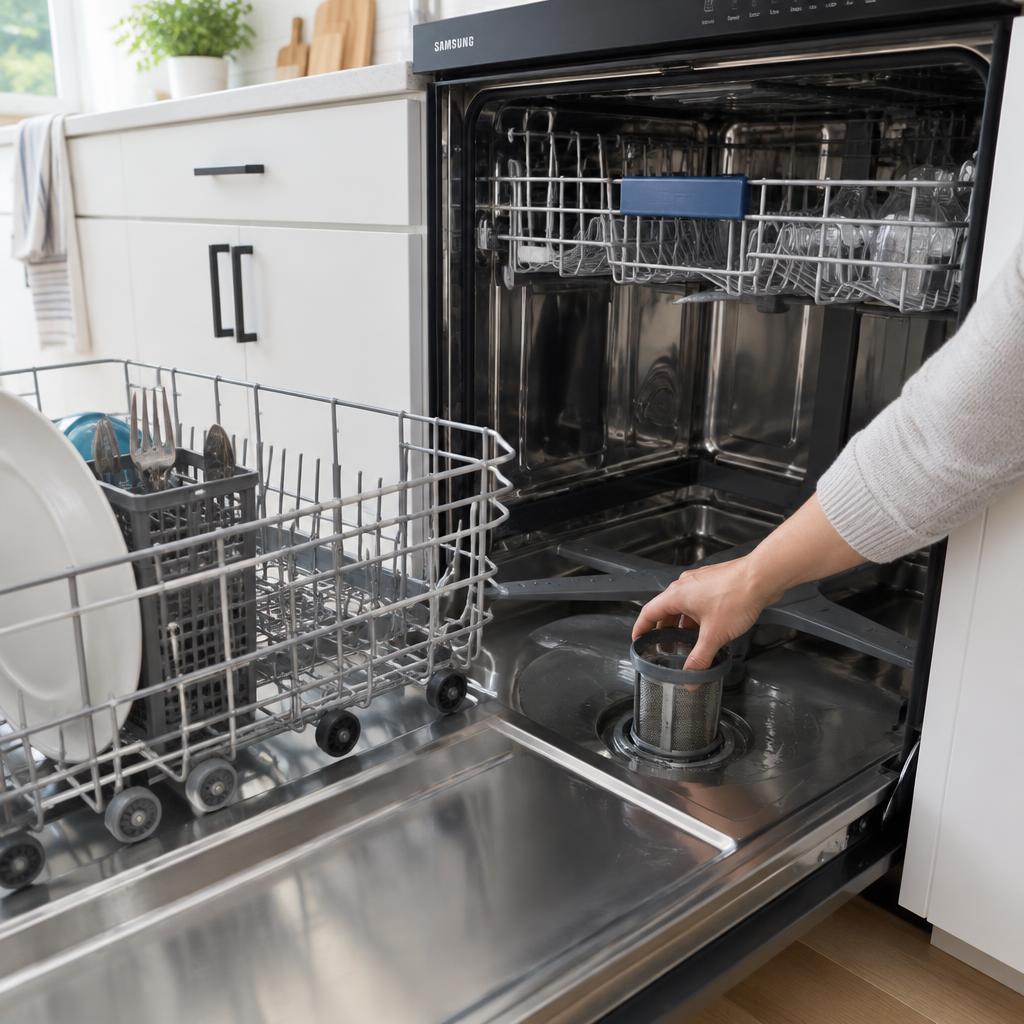
To fix this, remove the filter from the bottom of your dishwasher and rinse it under warm water. Use a soft brush to scrub away any stubborn debris. Clean your filter once a month for best results, especially if you frequently wash heavily soiled dishes.
Inadequate Water Temperature
Hot water is essential for breaking down grease and dissolving detergent effectively. If the water temperature in your dishwasher is too low, your dishes won’t get the deep clean they need. Most dishwashers require water to be at least 120°F to function optimally.
You can test your water temperature by running hot water from your kitchen faucet into a cup and measuring it with a thermometer. If the temperature is below 120°F, adjust your water heater settings or run your kitchen faucet for a minute before starting the dishwasher to ensure hot water enters the cycle immediately.
Hard Water and Mineral Buildup
Hard water contains minerals like calcium and magnesium that can leave a chalky residue on dishes and build up inside your dishwasher. Over time, this buildup can clog spray arms, block filters, and reduce overall cleaning efficiency.
If you suspect hard water is the problem, check for white spots or a gritty film on your glasses and dishes. Use a descaling agent or vinegar rinse to remove mineral deposits, and consider installing a water softener if hard water is a persistent issue.
Low-Quality or Incorrect Detergent
The detergent you use plays a significant role in your dishwasher’s performance. Low-quality detergents or those unsuited for your water type may fail to effectively break down food and grease. Too much detergent can also lead to soap residue while using too little can result in insufficient cleaning.
For best results, use a high-quality, enzyme-based detergent. Choose a product specifically formulated to combat mineral buildup if your water is hard. Adding a rinse aid can also help prevent water spots and improve drying performance.
Fixing the Problem: Step-by-Step
When your dishwasher leaves dishes dirty, here’s a detailed plan to get it working like new again:
Step 1: Inspect and Clean Spray Arms
Follow your dishwasher manual’s instructions to remove the spray arms. Rinse them under running water to dislodge debris, then use a toothpick to clear any clogged nozzles. Reinstall the arms, ensuring they rotate freely.
Step 2: Clean the Filters
Take out the filter from the dishwasher floor. Rinse it thoroughly under warm water and use a brush to scrub away grease and food particles. Reinsert the filter, making sure it’s securely locked in place.
Step 3: Check and Adjust the Water Temperature
Run your kitchen faucet until the water is hot, then measure the temperature. If it’s below 120°F, increase your water heater setting slightly. If your dishwasher has a heating element, ensure it’s functioning correctly.
Step 4: Optimize Loading Practices
Place dishes with their dirty sides facing inward toward the spray arms. Avoid overlapping items, and leave enough space between dishes for water to circulate. Ensure utensils are placed in their designated basket.
Step 5: Address Hard Water Problems
Run a cleaning cycle with a descaling agent or white vinegar to remove mineral buildup. Repeat this process monthly to prevent future issues. Invest in a water softener or dishwasher-specific water treatment system for persistent hard water.
Step 6: Upgrade Detergent Use
Choose a premium dishwasher detergent with enzymes and grease-cutting agents. For optimal performance, use the recommended amount and pair it with a rinse aid.
Keeping Your Dishwasher in Top Shape
Regular maintenance is the key to preventing dirty dishes. Here’s how to keep your dishwasher running smoothly:
- Clean filters and spray arms monthly.
- Use high-quality detergents and rinse aids.
- Run hot water from the faucet before starting a cycle.
- Inspect seals and spray arms for wear and tear.
- Schedule professional maintenance annually.
When DIY Isn’t Enough
If the problem persists after trying these solutions, it’s time to call a professional. Persistent dirt, strange noises, or water leaks could indicate a mechanical or electrical issue that requires expert attention. A qualified technician can diagnose and fix the problem, saving you time and frustration.
Your Questions, Answered
Can I use homemade cleaners in my dishwasher?
Yes, but sparingly. Homemade cleaners like vinegar and baking soda can help remove residue and odours but shouldn’t replace high-quality detergents.
How often should I clean the dishwasher filter?
Clean the filter once a month or more frequently if you use your dishwasher daily for optimal performance.
Wrap-Up and Next Steps
A dishwasher that leaves dishes dirty can be frustrating, but you can resolve the issue quickly and effectively with the right approach. By understanding the common causes and following these steps, you’ll enjoy sparkling clean dishes after every cycle. If the problem continues, don’t hesitate to seek professional help. With regular care, your dishwasher will continue to make life easier for years.
[/et_pb_text][/et_pb_column][/et_pb_row][/et_pb_section][et_pb_section fb_built=”1″ admin_label=”Section” module_class=”footer” _builder_version=”4.19.2″ _module_preset=”default” background_color=”#505050″ global_module=”248″ saved_tabs=”all” global_colors_info=”{}”][et_pb_row column_structure=”1_3,1_3,1_3″ _builder_version=”4.20.0″ _module_preset=”default” custom_css_main_element=”align-items:center;” global_colors_info=”{}”][et_pb_column type=”1_3″ _builder_version=”4.19.2″ _module_preset=”default” global_colors_info=”{}”][et_pb_image src=”https://trustedfixappliancerepair.ca/wp-content/uploads/2024/01/TrustedFix-footer-logo.jpg” alt=”TrustedFix footer logo” title_text=”TrustedFix footer logo” align_tablet=”center” align_phone=”center” align_last_edited=”on|tablet” _builder_version=”4.23.4″ _module_preset=”default” width=”90%” global_colors_info=”{}”][/et_pb_image][et_pb_social_media_follow icon_color=”#505050″ _builder_version=”4.23.4″ _module_preset=”default” text_orientation=”left” custom_margin=”-20px|||105px|false|false” custom_margin_tablet=”|75px|||false|false” custom_margin_phone=”|5px||0px|false|false” custom_margin_last_edited=”on|desktop” custom_padding=”||||false|false” text_orientation_tablet=”center” text_orientation_phone=”center” text_orientation_last_edited=”on|phone” border_radii=”on|30px|30px|30px|30px” global_colors_info=”{}”][et_pb_social_media_follow_network social_network=”facebook” url=”https://www.facebook.com/trustedfixappliancerepair” _builder_version=”4.23.4″ _module_preset=”default” background_color=”#FFFFFF” background_enable_color=”on” global_colors_info=”{}” follow_button=”off” url_new_window=”on”]facebook[/et_pb_social_media_follow_network][et_pb_social_media_follow_network social_network=”instagram” url=”https://www.instagram.com/trustedfix_appliance_repair” _builder_version=”4.23.4″ _module_preset=”default” background_color=”#FFFFFF” background_enable_color=”on” global_colors_info=”{}” follow_button=”off” url_new_window=”on”]instagram[/et_pb_social_media_follow_network][et_pb_social_media_follow_network social_network=”linkedin” url=”https://www.linkedin.com/company/trustedfix-appliance-repair” _builder_version=”4.23.4″ _module_preset=”default” background_color=”#FFFFFF” background_enable_color=”on” global_colors_info=”{}” follow_button=”off” url_new_window=”on”]linkedin[/et_pb_social_media_follow_network][et_pb_social_media_follow_network social_network=”twitter” url=”https://twitter.com/trustedfix” icon_color=”#505050″ _builder_version=”4.23.4″ _module_preset=”default” background_color=”#FFFFFF” background_enable_color=”on” global_colors_info=”{}” follow_button=”off” url_new_window=”on”]twitter[/et_pb_social_media_follow_network][/et_pb_social_media_follow][/et_pb_column][et_pb_column type=”1_3″ _builder_version=”4.19.2″ _module_preset=”default” global_colors_info=”{}”][et_pb_text _builder_version=”4.20.2″ _module_preset=”default” text_font=”||||||||” text_text_color=”#FFFFFF” header_3_font=”HELVETICANEUELTSTD-MD||||||||” header_3_text_color=”#FFFFFF” custom_margin=”||||false|false” text_orientation_tablet=”center” text_orientation_phone=”center” text_orientation_last_edited=”on|phone” global_colors_info=”{}”]
OPEN HOURS
Mon-Fri: 8 AM-9 PM
Saturday: 10 AM-9 PM
Sunday: 10 AM-9 PM
[/et_pb_text][/et_pb_column][et_pb_column type=”1_3″ _builder_version=”4.19.2″ _module_preset=”default” global_colors_info=”{}”][et_pb_text _builder_version=”4.20.2″ _module_preset=”default” text_font=”||||||||” text_text_color=”#FFFFFF” link_text_color=”#FFFFFF” header_3_font=”HELVETICANEUELTSTD-MD||||||||” header_3_text_color=”#FFFFFF” text_orientation_tablet=”center” text_orientation_phone=”center” text_orientation_last_edited=”on|phone” global_colors_info=”{}”]
QUICK LINKS:
[/et_pb_text][et_pb_text _builder_version=”4.23.4″ _module_preset=”default” text_font=”||||||||” text_text_color=”#FFFFFF” text_font_size=”20px” link_text_color=”#FFFFFF” header_3_font=”HELVETICANEUELTSTD-MD||||||||” header_3_text_color=”#FFFFFF” text_orientation_tablet=”center” text_orientation_phone=”center” text_orientation_last_edited=”on|phone” global_colors_info=”{}”]
Home
About
Appliance Repairs
Contact
[/et_pb_text][/et_pb_column][/et_pb_row][et_pb_row _builder_version=”4.20.0″ _module_preset=”default” global_colors_info=”{}”][et_pb_column type=”4_4″ _builder_version=”4.20.0″ _module_preset=”default” global_colors_info=”{}”][et_pb_text _builder_version=”4.27.4″ _module_preset=”default” text_font_size=”18px” custom_margin=”45px||-45px||false|false” global_colors_info=”{}”]
© 2025 TrustedFix Appliance Repair All Rights Reserved | Privacy Policy | Terms of Service | Sitemap
[/et_pb_text][/et_pb_column][/et_pb_row][/et_pb_section]
Need a technician?
We handle appliance repair across British Columbia. Same-day service usually available.