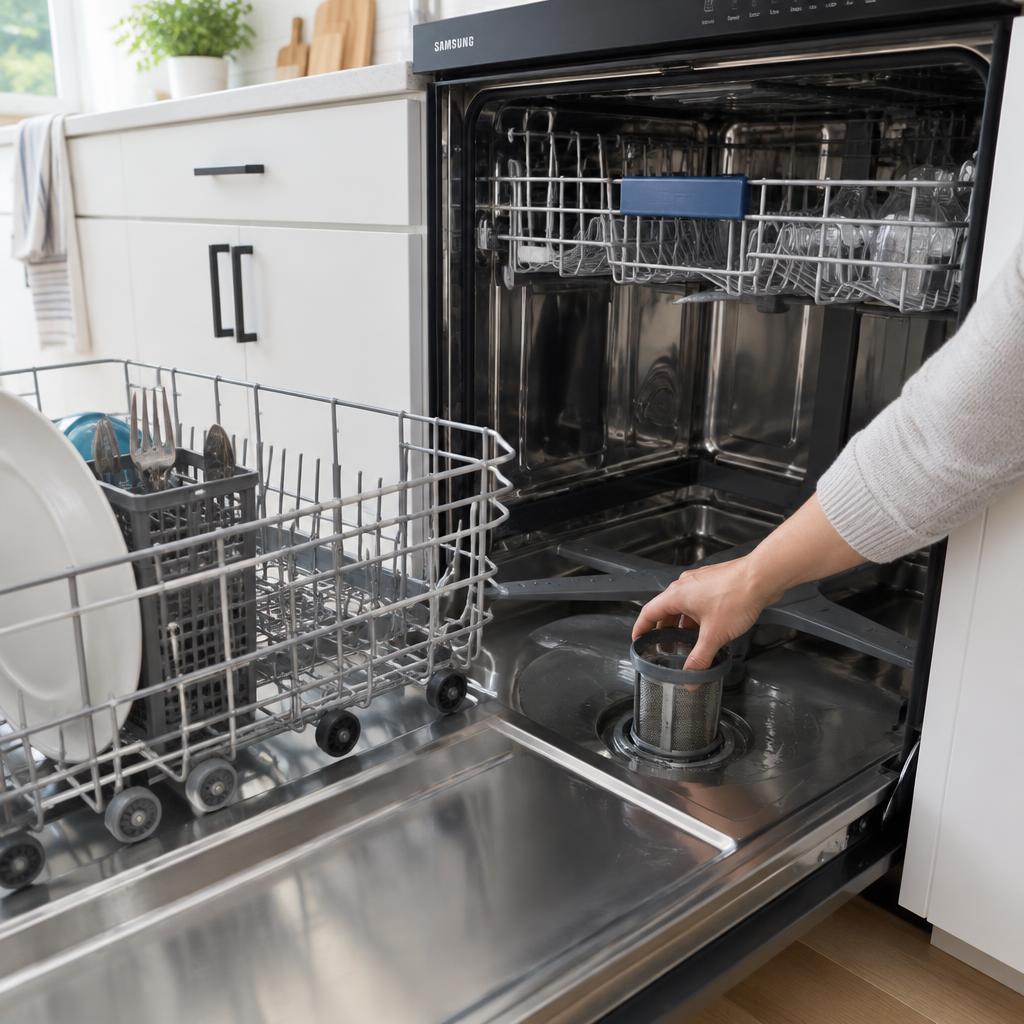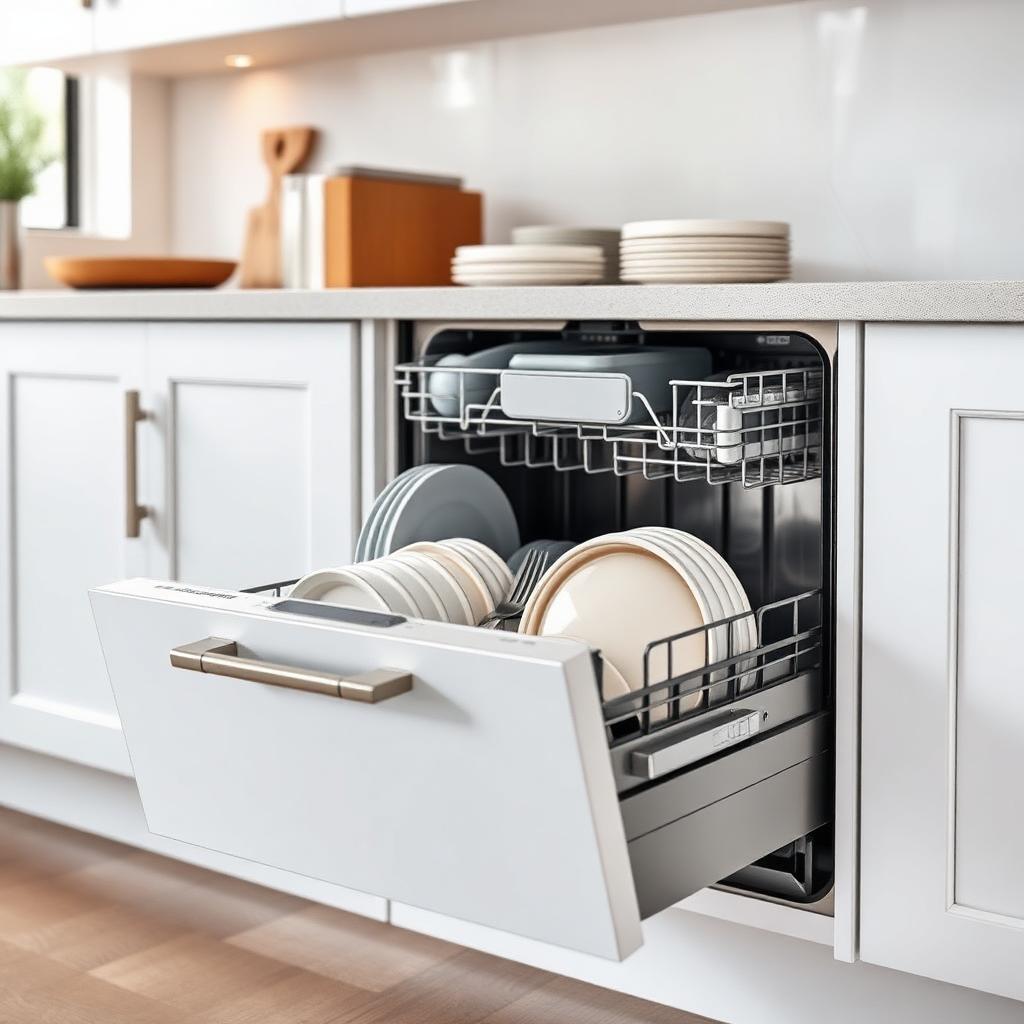
Your LG dishwasher stops during the wash cycle, starts draining continuously, or displays an AE or E1 error code.
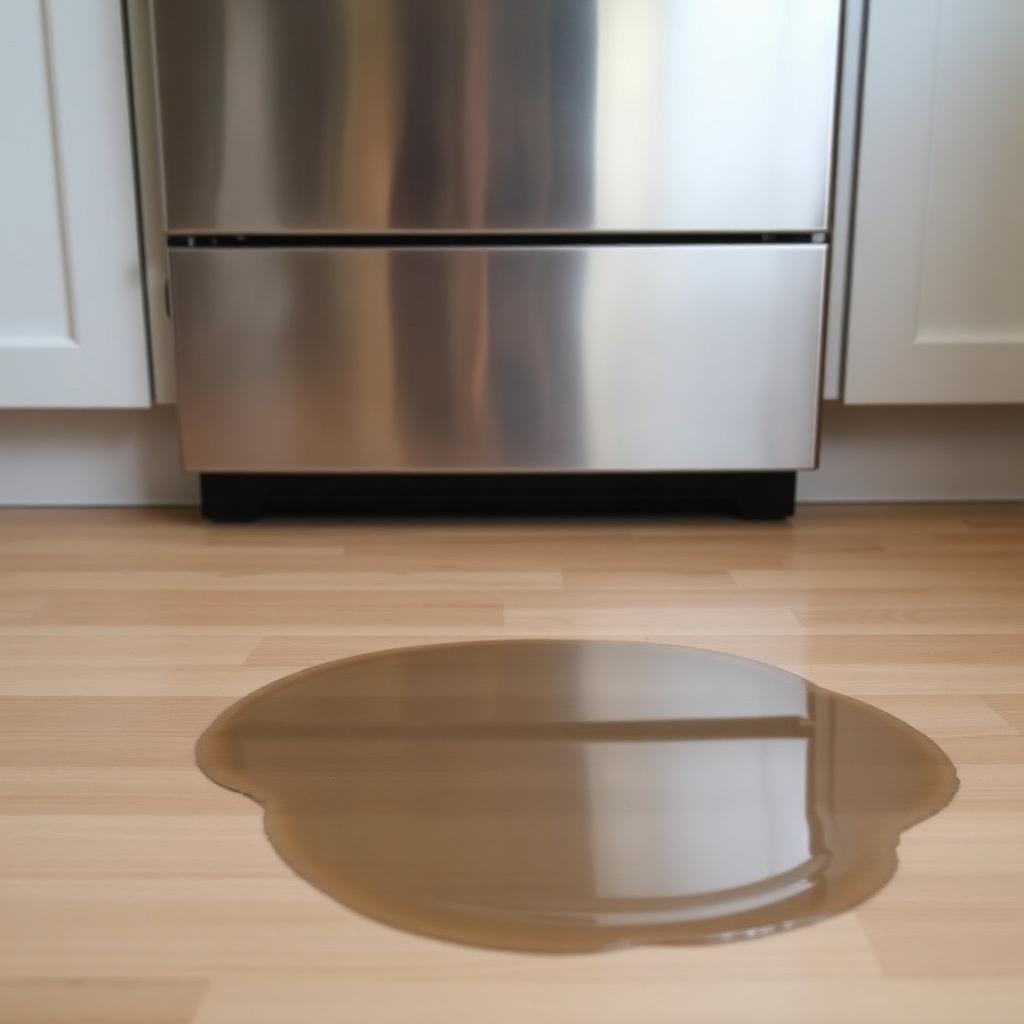
Sometimes water is clearly visible on the floor. In other cases, the kitchen looks completely dry, but the dishwasher still refuses to operate.
Does this mean the leak sensor is defective?
Not necessarily.
Many LG dishwashers have a moisture or flood sensor inside the lower base. When water enters the base, the control activates a safety response and may operate the drain pump to reduce the risk of further leakage.
In many cases, the sensor is doing exactly what it was designed to do. The real problem may be a leaking drain hose, loose water connection, damaged door gasket, excessive detergent, spray-arm problem, or an improperly levelled dishwasher.
The Issue: The Dishwasher Leaks or Displays AE/E1
Common symptoms include:
- The dishwasher displays an AE or E1 error.
- The drain pump runs continuously.
- The dishwasher stops before completing the cycle.
- The machine will not begin a new wash.
- Water appears under the dishwasher.
- Water leaks from one of the lower door corners.
- The leak happens only while draining.
- The dishwasher works again after drying but later displays the same error.
- There is no visible water, but the error remains.
LG Canada provides specific troubleshooting for AE and E1 dishwasher errors. LG also advises that many dishwasher leaks are related to installation, detergent use, or maintenance rather than a major internal failure.
The point in the cycle when the leak appears can help identify the source.
A leak during filling may come from the inlet valve, water-supply line, or connection.
A leak during washing may come from the door gasket, lower seal, spray arm, circulation system, or sump.
A leak during draining may be caused by the drain hose, drain pump, or a loose hose clamp.
How to Diagnose an LG Dishwasher Leak
Turn off the power and water
If there is visible water, stop the dishwasher.
Turn off the dishwasher circuit breaker and close the water-supply valve under the sink.
Dry the floor and surrounding cabinets. Do not repeatedly reset and run the dishwasher while an active leak is present.
Check the detergent
Using too much detergent is a common cause of excess foam and water overflowing from the dishwasher.
Only use detergent manufactured for automatic dishwashers. Never use regular liquid dish soap.
LG warns that using multiple detergent pods, overfilling the detergent dispenser, or using hand-washing liquid can produce excessive suds and cause water to overflow.
If the dishwasher is full of foam, remove as much as possible and allow the machine to dry before testing it again.
Inspect the door gasket
Open the dishwasher and wipe the rubber gasket around the tub opening.
Look for:
- Food or grease buildup
- A gasket pulled out of position
- Cracks or tears
- Flattened areas
- Damage near the lower corners
- An object preventing the door from closing
LG advises that food and grease buildup can prevent the door gasket from sealing properly. A torn or damaged seal normally requires service or replacement.
A door leak is not always caused by the gasket itself. The dishwasher may also be leaning forward, the door may be misaligned, or a damaged spray arm may be directing water toward the door.
Make sure the dishwasher is level
Place a level across the top and inside the dishwasher.
If the dishwasher leans forward or to one side, water can collect near the door and escape through the lower corners.
LG states that an improperly levelled dishwasher can cause door leaks and recommends adjusting the front and rear legs until the machine is level and securely mounted.
Also check that the gap between the door and tub is even on both sides.
Check the spray arms
Remove the racks and inspect the spray arms.
Look for:
- Cracks along the seams
- Blocked spray holes
- A loose spray arm
- An arm that does not rotate freely
- Utensils stopping the arm from turning
A cracked spray arm can direct a concentrated stream of water toward the door seal and create a leak that looks like a gasket problem.
LG recommends checking the spray arms for damage or buildup when diagnosing a dishwasher leak.
Inspect the water-supply connection
Look under the sink and behind the dishwasher when accessible.
Check the water-supply hose, inlet-valve connection, and 90-degree elbow for moisture.
A dry paper towel can help locate a small leak that is difficult to see.
LG identifies loose connections, worn threads, and damage around the inlet valve or 90-degree elbow as possible sources of water underneath the dishwasher.
Inspect the drain hose
Check the dishwasher drain hose under the sink and along its accessible length.
Look for:
- Cracks or pinholes
- Loose clamps
- Water marks
- A damaged sink connection
- A hose pinched behind the dishwasher
- A hose rubbing against a sharp cabinet edge
A drain hose may leak only when the drain pump is operating. The dishwasher may remain dry during filling and washing but leak near the end of the cycle.
LG’s installation instructions advise preventing kinks or pinched hoses and checking the drain-hose connection for leaks after installation.
The Likely Solution
The repair depends on where the water is coming from.
If the drain hose is leaking
Replace the hose and inspect both connection points.
After replacement, the technician should run a complete drain cycle and verify that the hose does not leak under pressure.
If the door gasket is damaged
Clean and reposition the gasket when it is only dirty or slightly displaced.
Replace the gasket or lower seal when it is torn, hardened, permanently flattened, or no longer seals properly.
The dishwasher must also be levelled correctly before the repair is considered complete.
If the leak sensor is activated
The base must be inspected and dried, but drying the sensor alone is not a permanent repair.
The technician should locate where the water entered the base.
Possible sources include:
- Drain hose
- Water inlet connection
- Door gasket
- Lower door seal
- Circulation pump
- Drain pump
- Sump seal
- Internal hose
- Excess detergent
- Cracked spray arm
If the sensor is defective
The leak sensor may require replacement when the dishwasher base is completely dry but the machine continues displaying AE or E1 and the sensor or wiring fails testing.
The sensor should not be replaced simply because an error code appears. A new sensor will activate again if the original leak is not repaired.
Technician’s Recommendation
As an appliance technician, I normally recommend repairing an LG dishwasher with a drain-hose, gasket, connection, or leak-sensor problem.
These are replaceable components and do not normally mean the entire dishwasher has reached the end of its life.
Most customers choose the repair because a replacement dishwasher can cost two or three times more after including:
- Delivery
- Installation
- Removal of the old dishwasher
- Plumbing connections
- Electrical connections
- Cabinet adjustments
Do not continue operating the dishwasher if the AE or E1 error returns after the base has dried.
A temporary reset may clear the code, but it does not repair the source of the water. Continued leaking may damage the flooring, cabinets, electrical components, or dishwasher control system.
A proper repair includes locating the leak, replacing or securing the failed component, drying the base, and testing the dishwasher during filling, washing, and draining.
LG Dishwasher Leak-Repair Prices
The final price depends on the model, failed component, accessibility, and part availability.
Typical TrustedFix pricing may include:
- Professional diagnosis and labour: approximately $220–$280
- Leak sensor: approximately $80–$190
- Drain hose: approximately $90–$200
- Door gasket or lower seal: approximately $100–$240
- Estimated common repair total: approximately $300–$520
Prices are before applicable taxes, travel charges, or additional parts.
The cost may be higher if the dishwasher requires a circulation pump, drain pump, sump assembly, inlet valve, wiring repair, or main control board.
LG uses different hoses, sensors, gaskets, and pump assemblies across its dishwasher models. Always provide the complete model number before ordering parts.
Book an LG Dishwasher Repair
If your LG dishwasher displays AE or E1, drains continuously, or leaks underneath the door, turn off the electrical power and water supply.
Check the detergent, door gasket, spray arms, levelling, supply connection, and accessible drain hose.
If the problem continues, TrustedFix Appliance Repair can inspect the leak sensor, hoses, pumps, door seals, sump, inlet system, and internal connections before recommending a repair.
In most cases, locating and repairing an LG dishwasher leak is considerably less expensive than purchasing and installing a new dishwasher.
The next natural article in this series is LG Dishwasher Not Draining: OE Error Diagnosis and Repair Cost.
Related service
Need a technician?
We handle appliance repair across Metro Vancouver and the Lower Mainland. Same-day service usually available.