Your Miele refrigerator has power. The lights and display are working, but the refrigerator or freezer is becoming warm.
You may hear the fans operating, but the compressor is silent. In other cases, the compressor may attempt to start and then stop.
Does this mean the compressor has failed?
Not necessarily.
Many Miele refrigerators use a variable-speed compressor controlled by an electronic inverter board. Instead of using a traditional mechanical start relay, the inverter board regulates the electrical power supplied to the compressor.
When the inverter board fails, the refrigerator may appear to operate normally while producing little or no cooling.
The Issue: The Miele Refrigerator Is Not Cooling
Common symptoms include:
- The refrigerator section is warm.
- The freezer is not freezing.
- Both compartments are becoming warm.
- The lights and display work, but the compressor does not run.
- Interior fans operate without normal cooling.
- The compressor starts and stops unexpectedly.
- The refrigerator displays a temperature alarm or fault.
- The compressor runs inconsistently.
- Resetting the refrigerator restores cooling only temporarily.
- The appliance is completely quiet even though the temperature is rising.
An inverter-board failure is one possibility, but it is not the only possible cause.
A Miele refrigerator may also stop cooling because of incorrect settings, Demo Mode, poor cabinet ventilation, a failed fan, damaged wiring, a temperature sensor, the main electronic control, a sealed-system problem, or a defective compressor.
Miele confirms that Demo Mode allows the refrigerator display and lights to operate while the cooling system remains switched off. This setting should be checked before assuming that a major component has failed.
How to Diagnose a Miele Refrigerator That Is Not Cooling
Check the temperature settings
Make sure the refrigerator and freezer sections are switched on.
Check whether the temperature display shows an alarm, fault code, or unusually high temperature.
A normal target is generally around:
- Refrigerator: 3°C to 4°C
- Freezer: approximately –18°C
Do not rely only on how the food feels. Place an appliance thermometer inside and monitor the actual temperature.
Check for Demo Mode
If the refrigerator is newly installed, was recently reset, or the controls were changed, confirm that Demo Mode is not active.
In Demo Mode, the display, interior lighting, and controls may appear normal, but the compressor will not provide cooling. Depending on the model, a flag symbol may indicate that this setting is active.
Reset the refrigerator
Disconnect the refrigerator from power or turn off its circuit breaker for approximately one minute.
Restore the power and monitor the appliance.
Miele recommends a one-minute power reset when a refrigeration appliance stops responding. If the problem continues, professional service is required.
A reset may clear a temporary electronic error. It will not permanently repair a defective inverter board, compressor, sensor, or control module.
Check the ventilation
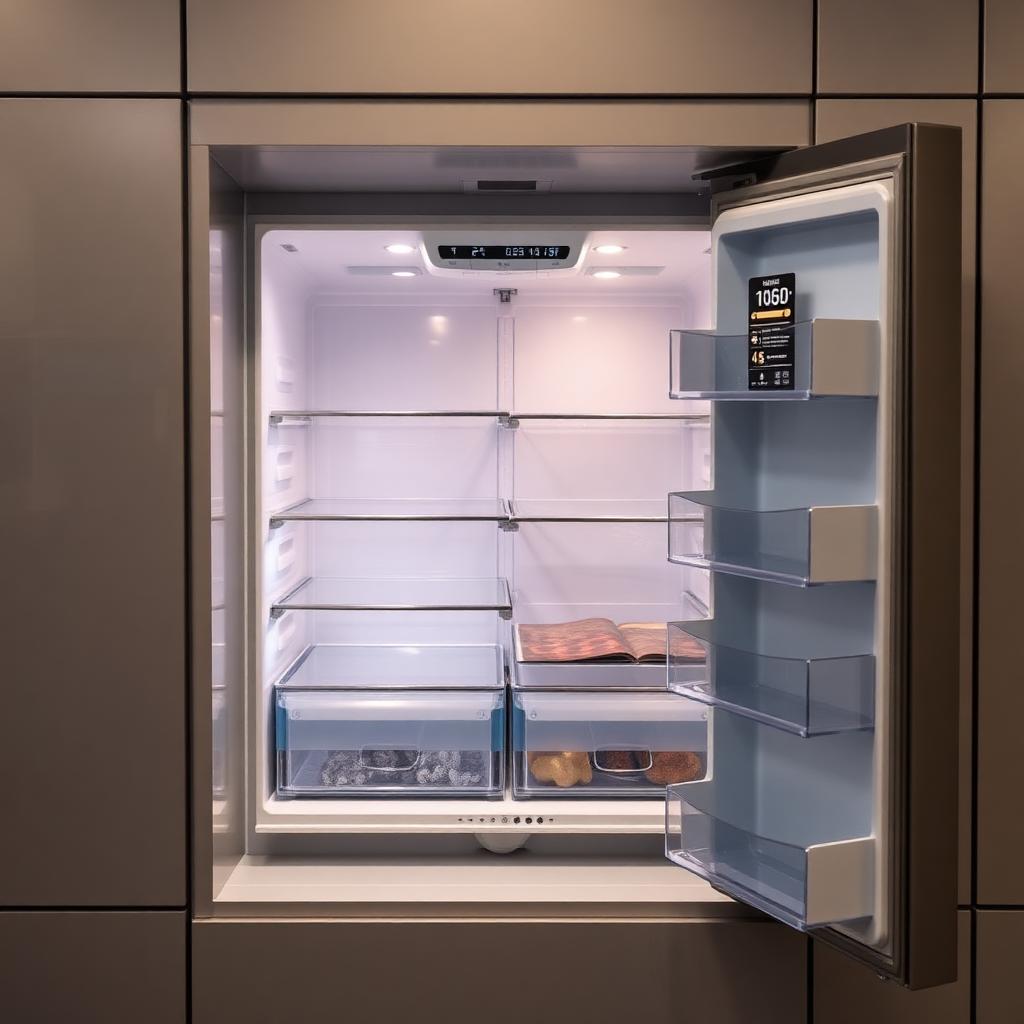
Many Miele refrigerators are installed inside cabinetry. Proper ventilation is essential because heat must escape from behind and above the appliance.
Check that the ventilation openings are not blocked by:
- Dust
- Boxes or household items
- Cabinet trim
- Insulation
- Pet hair
- An incorrect installation
Miele identifies inadequate housing ventilation as one possible cause of reduced cooling performance. Warm air must be able to leave the appliance enclosure.
Listen for the compressor
The compressor is usually located near the bottom rear of the refrigerator.
Listen carefully for several minutes.
Possible observations include:
- Fans operate, but the compressor is silent: The inverter board, compressor, main control, wiring, or power supply may be responsible.
- The compressor attempts to start and stops: The inverter board may be failing, but the compressor may also be mechanically or electrically damaged.
- The compressor runs continuously without cooling: The problem may involve the sealed refrigeration system rather than the inverter.
- Nothing operates: Check the electrical supply, controls, and main control system first.
Do not access or test the inverter board while the refrigerator is connected to power. An inverter can contain dangerous voltage even after the appliance has been disconnected.
The Likely Solution
The compressor inverter board receives a command from the refrigerator’s main control and changes household electrical power into the controlled output required by the variable-speed compressor.
If the inverter does not provide the correct output, the compressor cannot run normally.
Before replacing it, a technician should test:
- Incoming power to the refrigerator
- Voltage reaching the inverter
- Communication or control signal from the main board
- Inverter-board connections
- Compressor winding resistance
- Compressor terminals
- Wiring and harnesses
- Fans and temperature sensors
- Signs of a sealed-system failure
If the inverter receives the correct power and control signal, the compressor tests correctly, and the inverter does not operate the compressor, the inverter board is likely defective.
The solution is normally to replace the inverter with the correct model-specific part.
Miele sells model-specific compressor electronics, including inverter module 9120760, described as Electronics VCC3 1156 20 F 08. Different refrigerator models may use completely different inverter modules.
The complete model and serial number must always be checked before ordering.
Technician’s Recommendation: Repair or Replace?
As an appliance technician, I normally recommend repairing a Miele refrigerator when the inverter board is confirmed as the only failed component.
Miele refrigerators are premium appliances. Replacing a built-in Miele refrigerator may involve:
- A costly new appliance
- Professional delivery
- Removal of the existing refrigerator
- Cabinet or panel adjustments
- Specialized installation
- Disposal charges
An inverter-board repair is normally considerably less expensive than purchasing and installing another premium refrigerator.
However, diagnosis is extremely important.
A technician should never replace an expensive inverter board simply because the compressor is not running. A damaged compressor can overload or damage the inverter, and a failed main control may not be sending the correct signal.
Installing a new inverter without testing the compressor and control signal can result in an expensive misdiagnosis.
Repair is generally recommended when:
- The refrigerator is otherwise in good condition.
- The compressor tests correctly.
- The inverter is the confirmed failure.
- There are no major sealed-system problems.
- The required part is available.
Replacement may be considered when the refrigerator has a failed compressor, a refrigerant-system problem, several electronic failures, significant cabinet damage, or multiple expensive repairs at the same time.
Miele Refrigerator Inverter-Board Repair Price
The exact cost depends on the refrigerator model, inverter design, OEM-part availability, installation access, and diagnostic time.
Typical TrustedFix pricing may include:
- Miele compressor inverter board: approximately $300–$700
- Professional diagnosis and labour: approximately $280–$360
- Estimated complete repair: approximately $580–$1,060
Prices are before applicable taxes, travel charges, or additional parts.
One Canadian replacement-parts supplier currently lists an aftermarket version of Miele inverter 9120760 for approximately $299, but genuine OEM pricing and availability can differ substantially.
The repair may cost more if the refrigerator must be removed from cabinetry or also requires wiring, sensors, a control module, a fan, or sealed-system work.
Miele Models Using Inverter Compressors
Inverter-controlled compressors are found in selected Miele refrigerator, freezer, bottom-freezer, and built-in models.
Not every Miele refrigerator uses the same inverter board. Even appliances that look identical may have different electronics based on their production date and serial number.
Always provide:
- The complete model number
- Serial number
- Type number
- Any fault code displayed
The model label is commonly located inside the refrigerator cabinet, near a side wall, behind a drawer, or around the door opening.
Book a Miele Refrigerator Repair
If your Miele refrigerator has power but is not cooling, first check the temperature settings, Demo Mode, ventilation, and electrical supply.
If the fans operate but the compressor remains silent, the inverter board may be faulty. However, the inverter, compressor, main control, wiring, and sensors must all be tested before parts are ordered.
TrustedFix Appliance Repair can diagnose the compressor inverter, main control, fans, sensors, wiring, and refrigeration system before recommending a repair.
In many cases, replacing a confirmed inverter board is significantly less expensive than replacing a premium Miele refrigerator.
Related service
Need a technician?
We handle appliance repair across Metro Vancouver and the Lower Mainland. Same-day service usually available.