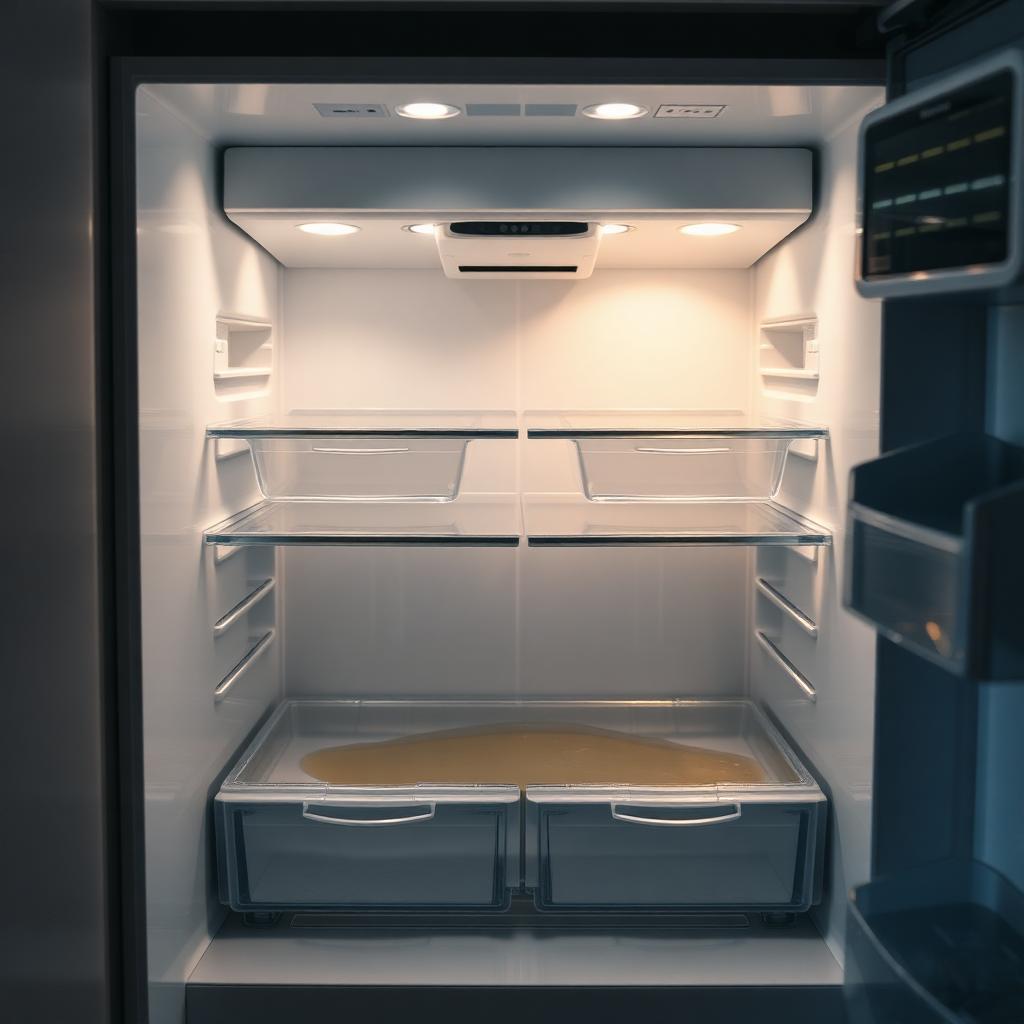
You open your refrigerator and discover water underneath the crisper drawers.
In other cases, you may find a sheet of ice at the bottom of the freezer, water dripping from the ceiling of the refrigerator section, or a puddle appearing on the kitchen floor.
Does this mean your refrigerator needs to be replaced?
Usually, no.
One of the most common causes of water inside a refrigerator is a clogged or frozen defrost drain.
The refrigerator regularly melts frost from the evaporator during an automatic defrost cycle. The water should travel through a drain opening, down a tube, and into a drain pan underneath the appliance.
When that drain becomes blocked by ice, food debris, dust, or buildup, the water has nowhere to go. It can collect inside the freezer, travel into the refrigerator compartment, or eventually leak onto the floor.
The Issue: Water or Ice Inside the Refrigerator
Common symptoms include:
- Water underneath the crisper drawers
- Water dripping from the refrigerator ceiling
- A sheet of ice at the bottom of the freezer
- Ice underneath the freezer drawer
- Water leaking from the front of the appliance
- Water appearing after the refrigerator completes a defrost cycle
- Food packages freezing to the bottom of the freezer
- An unpleasant smell caused by standing water
- Frost building up around the evaporator cover
- The leak returning after the water is wiped away
The exact location of the water can help identify the cause.
If water is underneath the vegetable drawers, it may be travelling from a blocked freezer drain into the fresh-food compartment.
If ice is forming underneath a bottom freezer drawer, the defrost drain may be frozen.
If water is coming from the water dispenser, filter housing, or supply connection, the problem may involve the water system instead of the defrost drain.
How to Diagnose a Refrigerator That Is Leaking Inside
Find where the water starts
Remove the food and drawers from the affected area.
Dry the water and inspect the refrigerator again after several hours.
Look for:
- Water underneath the crisper drawers
- Ice underneath the freezer basket
- Water marks on the rear interior panel
- Frost around the evaporator cover
- Water near the filter housing
- Moisture around the door opening
- Water underneath the appliance
If the water appears again after the refrigerator completes a defrost cycle, a blocked drain becomes a strong possibility.
Inspect the freezer floor
On many refrigerators, the defrost drain is located underneath or behind the freezer’s rear interior panel.
A thick sheet of ice at the bottom of the freezer often means that defrost water cannot enter the drain.
The water freezes during normal operation, melts slightly during the next defrost cycle, and then freezes again. Over time, the ice can become thick enough to flow into another compartment or out of the appliance.
Do not use a knife, screwdriver, or sharp tool to remove the ice. Refrigeration tubing and wiring may be located underneath the freezer liner. Puncturing the liner or evaporator can cause serious and expensive damage.
Check the door seal
Inspect the rubber gasket around the refrigerator and freezer doors.
Look for:
- Tears or cracks
- A section pulled away from the door
- Food or grease buildup
- A permanently flattened area
- A loose corner
- Gaps between the gasket and cabinet
- A door that does not close evenly
A damaged door seal does not always cause water to leak directly.
However, warm and humid room air can enter through the gap. This creates additional frost inside the refrigerator or freezer. When the appliance enters defrost, the extra frost produces more water and may contribute to repeated drain freezing or overflowing.
Clean the gasket using warm water and mild soap. Make sure food containers and drawers are not preventing the door from closing.
A simple test is to close the door on a piece of paper. If the paper pulls out with almost no resistance, the gasket may not be sealing properly in that area.
Check the refrigerator’s position
Make sure the refrigerator is level and stable.
Many refrigerators are designed to lean slightly backward so that the doors close naturally and defrost water travels toward the drain.
If the refrigerator leans forward, water may not flow correctly, and the doors may remain slightly open.
Check that:
- The appliance is stable
- The doors close by themselves from a partially open position
- The freezer drawer is fully closing
- The refrigerator is not pushed against the wall incorrectly
- The drain pan underneath is correctly positioned
Check the water filter and supply line
Not every refrigerator leak is caused by the defrost drain.
If your refrigerator has a water dispenser or ice maker, inspect the accessible water system.
Possible leak sources include:
- Water filter
- Filter housing
- Water inlet valve
- Ice-maker fill tube
- Plastic water line
- Connection behind the refrigerator
- Water reservoir inside the fresh-food section
A water-system leak may continue even when the refrigerator is not in a defrost cycle.
If water is actively spraying or flowing, turn off the refrigerator’s water-supply valve until the problem is repaired.
The Likely Solution
If the defrost drain is clogged or frozen
The refrigerator may need a complete drain service.
A technician normally:
- Disconnects the refrigerator from power.
- Removes the freezer drawers, shelves, or interior panel as required.
- Melts the ice safely.
- Opens and cleans the drain hole.
- Flushes the complete drain tube.
- Checks the drain pan underneath the appliance.
- Reassembles and tests the refrigerator.
Simply melting the visible ice may provide only a temporary solution.
The complete tube must be cleared. Food debris, dust, insulation material, or buildup deeper inside the line can cause the drain to freeze again.
Some models may also require a drain-tube update, heater probe, or redesigned drain component to prevent repeat blockages.
If the door gasket is damaged
The gasket should be cleaned and repositioned when it is only dirty or slightly out of place.
Replacement may be required when it is:
- Torn
- Cracked
- Hardened
- Permanently deformed
- No longer making contact with the cabinet
After installation, the new gasket must sit evenly around the entire door.
In some cases, the door hinges or alignment also require adjustment. Replacing the seal alone will not solve the problem if the door itself is sagging or misaligned.
If the leak comes from the water system
The failed filter, housing, hose, valve, or fitting should be replaced.
The technician should test the system under pressure and run the water dispenser and ice maker before completing the repair.
Technician’s Recommendation: Repair or Replace?
As an appliance technician, I normally recommend repairing a refrigerator with a clogged drain or damaged door seal.
These are common service problems and do not normally mean that the compressor or sealed refrigeration system has failed.
Most customers choose the repair because a new refrigerator may cost two or three times more after including:
- Delivery
- Installation
- Removal of the old refrigerator
- Water-line connection
- Door removal for access
- Cabinet or flooring adjustments
A drain service can often return the refrigerator to normal operation without replacing major components.
However, it is important to repair the problem properly.
Wiping away the water or melting only the visible ice may temporarily hide the issue. If the complete drain tube remains restricted, the leak usually returns.
The technician should also determine why the drain became blocked. A damaged door seal, poor door closing, excessive frost, or incorrect refrigerator position can contribute to recurring problems.
Refrigerator Leak-Repair Prices
The final price depends on the refrigerator design, location of the drain, amount of ice, and whether the appliance must be partially disassembled.
Typical TrustedFix pricing may include:
- Defrost-drain cleaning and service: approximately $220–$350
- Door gasket or seal: approximately $120–$350
- Professional gasket installation: approximately $220–$280
- Common repair total: approximately $220–$630
These are general Canadian estimates before taxes, travel charges, or additional parts.
The repair may cost more when:
- The refrigerator must be removed from cabinetry
- A large amount of ice must be melted
- The drain tube requires replacement
- The door hinges need adjustment
- A water valve, filter housing, or supply line is leaking
- Additional electrical or defrost-system problems are found
Refrigerator Styles This Problem May Affect
A clogged defrost drain can occur in many refrigerator designs, including:
- Top-freezer refrigerators
- Bottom-freezer refrigerators
- French-door refrigerators
- Side-by-side refrigerators
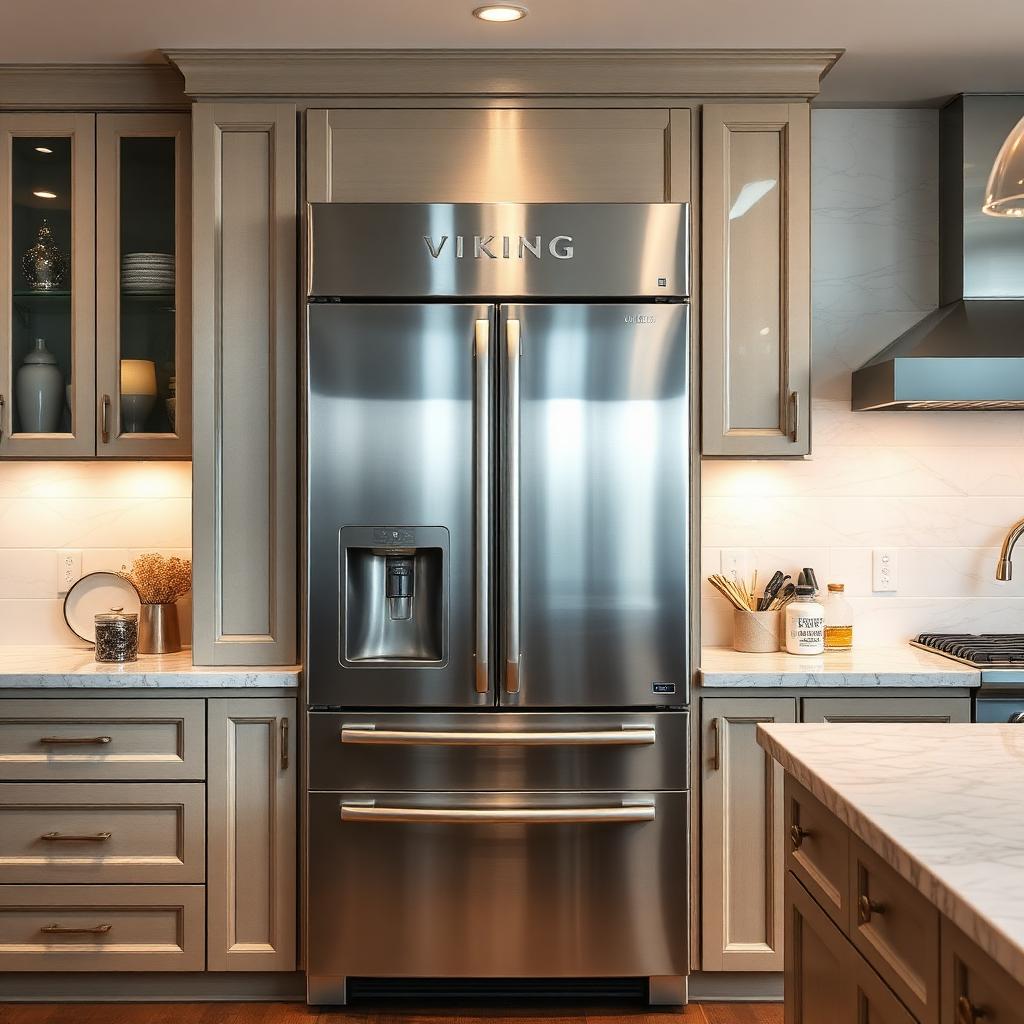
- Built-in refrigerators
- Apartment-size refrigerators
The location of the drain and the disassembly procedure vary by brand and model.
Always provide the complete model number when requesting service. The model label is usually located inside the fresh-food section, along a side wall, near the ceiling, behind a drawer, or around the door opening.
Book a Refrigerator Leak Repair
If water is collecting underneath the drawers, ice is forming at the bottom of the freezer, or water is leaking onto the floor, begin by checking the door seal and looking for visible ice.
Do not use sharp tools to remove frozen water from the freezer.
TrustedFix Appliance Repair can inspect the defrost drain, drain tube, door gasket, water filter, supply lines, valves, and refrigerator alignment before recommending a repair.
In most cases, a refrigerator leaking from a clogged drain is worth repairing. A professional drain service or door-seal replacement is normally much less expensive than purchasing and installing a new refrigerator.
Related service
Need a technician?
We handle appliance repair across Metro Vancouver and the Lower Mainland. Same-day service usually available.