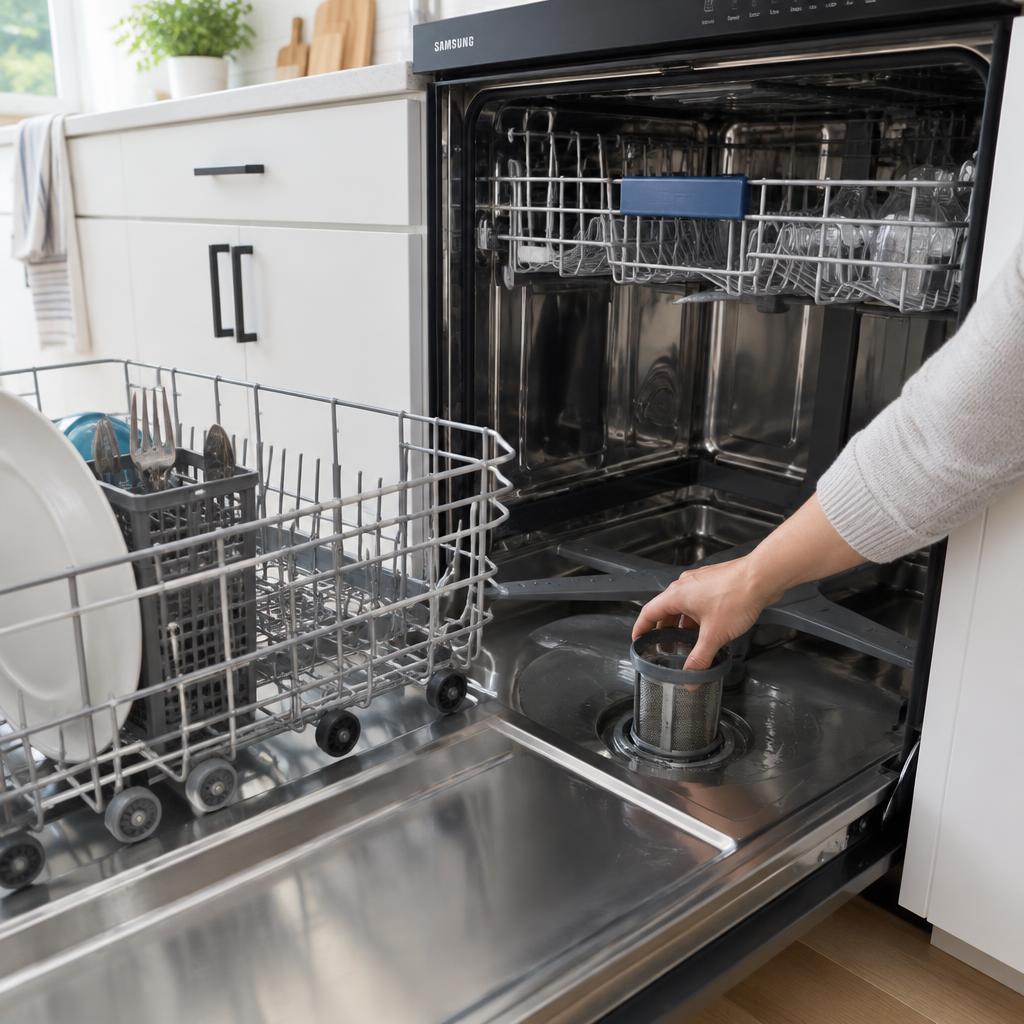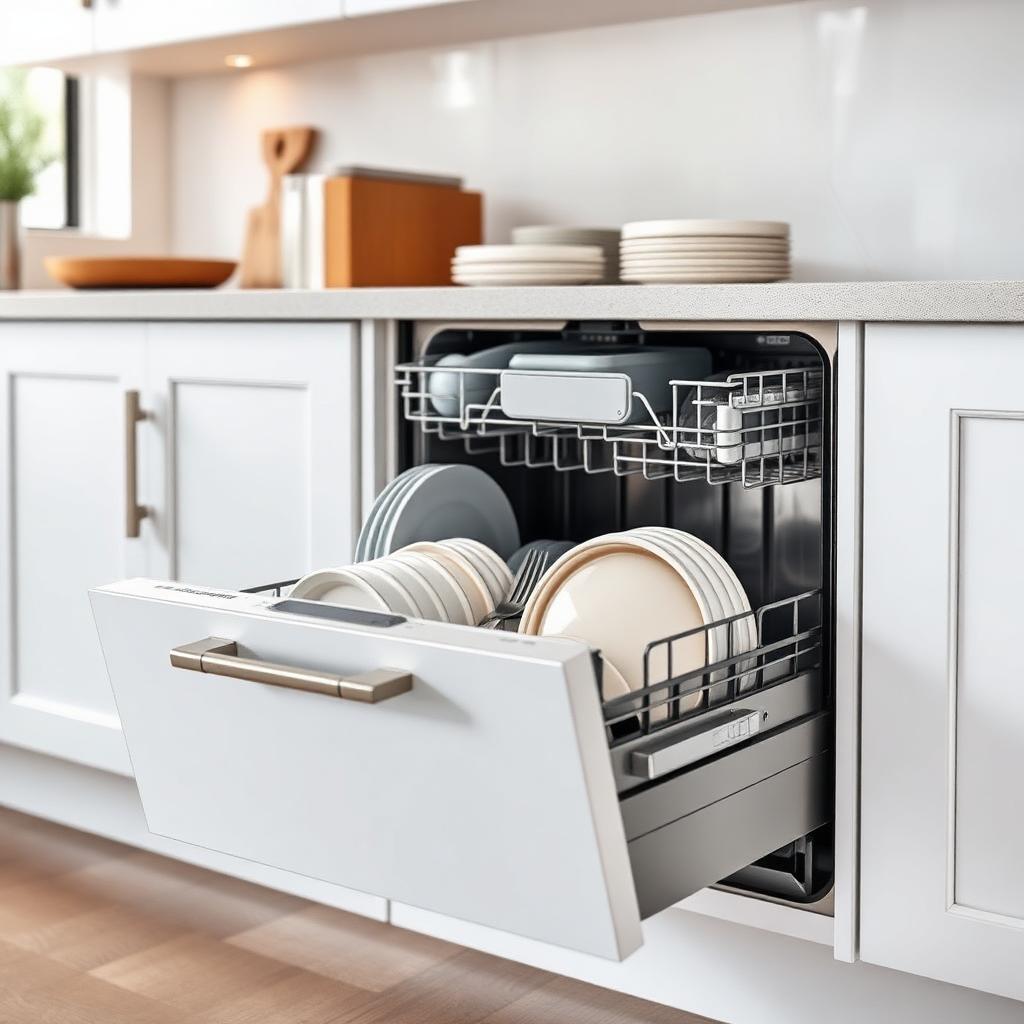
Your Samsung dishwasher stops during the cycle, starts draining continuously, or displays an LC or LE error code.
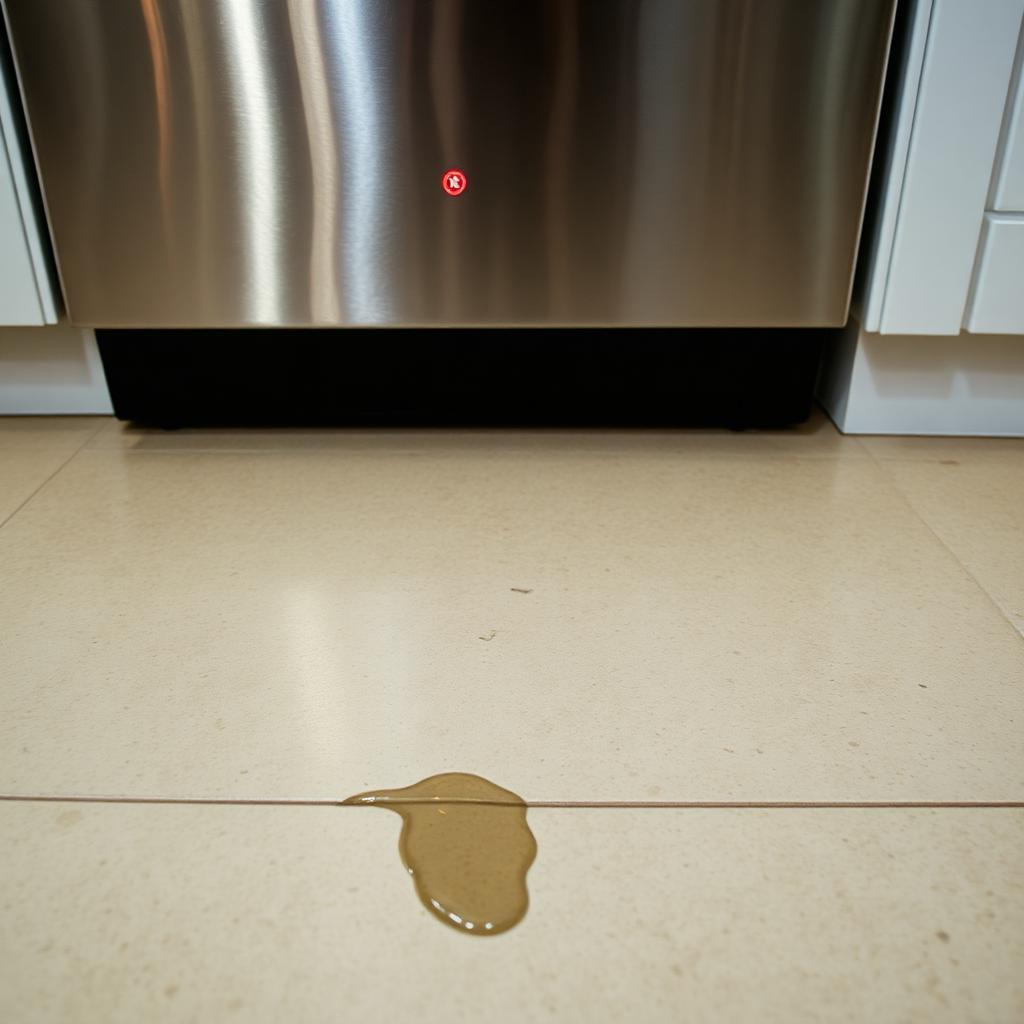
You may see water on the floor, but sometimes there is no visible leak at all.
Does this mean the leak sensor needs to be replaced?
Not necessarily.
Samsung dishwashers have a moisture sensor underneath the dishwasher. When water reaches the base, the sensor activates a safety mode. The dishwasher may stop washing and run the drain pump continuously to reduce the risk of additional water damage. An LC or LE code means moisture was detected where it should not be, even when the leak is too small to see from the front.
In our experience, the sensor is often doing its job. The real cause may be a damaged drain hose, loose connection, lower door seal, tub gasket, pump seal, excessive detergent, or improper installation.
The Issue: The Dishwasher Leaks or Drains Continuously
Common symptoms include:
- Water appears underneath or in front of the dishwasher.
- The dishwasher displays LC or LE.
- The drain pump runs continuously.
- The dishwasher will not begin a new cycle.
- The machine stops partway through washing.
- Water leaks from the lower corners of the door.
- The leak happens only during draining.
- The leak happens only during the main wash.
- The dishwasher works after drying out but displays the code again later.
- There is no visible leak, but the leak error remains.
The timing of the leak can help identify its source.
If water appears while the dishwasher is filling, the water-supply hose, inlet valve, or connection may be responsible.
If it leaks during washing, the door gasket, lower door seal, spray system, sump, or circulation components may be involved.
If it leaks while draining, the drain hose, drain pump, or hose connections become stronger suspects.
How to Diagnose a Samsung Dishwasher Leak
Turn off the power and water
If water is visible, stop the dishwasher.
Turn off the dishwasher’s circuit breaker and close the water-supply valve under the sink.
Wipe up the water to protect the floor and cabinetry. Do not continue resetting and operating the dishwasher while it is actively leaking.
Check whether it was a spill
Water may enter the dishwasher base without an internal component failing.
For example, water can spill around the dishwasher during loading, cleaning, or installation. If the machine was recently moved, some water may have reached the leak sensor.
Dry the visible area and monitor whether water returns during another cycle. Samsung recommends first confirming that the water is from an active leak rather than a one-time spill.
Check the detergent
Using too much detergent or the wrong type can create excessive foam.
Dishwasher detergent must be used—never regular liquid dish soap. Excessive suds can escape around seals, reach the sensor, and trigger an LC or LE error.
Samsung notes that detergent residue and excess foam can remain wet around the sensor longer than normal water.
Inspect the door gasket and lower seal
Clean the rubber gasket around the dishwasher opening using a soft cloth and mild soap.
Look for:
- Food debris
- Grease buildup
- A section pulled out of its channel
- Cracks or tears
- Flattened areas
- A gap near either lower corner
Samsung advises that foreign material or a misaligned rubber seal can create a gap large enough for water to escape.
Some Samsung dishwashers also have a black rubber flap or moisture barrier underneath the door. It should sit behind the kick plate and should not hang below the door. If it is out of position, the dishwasher may become noisier and may leak.
The lower moisture barrier is not the same component as the main tub gasket. A technician should identify which seal is actually damaged before ordering parts.
Make sure the dishwasher is level
A dishwasher that leans forward can allow water to collect near the door and leak from the lower corners.
If it is not level from side to side, the door may rub against the surrounding cabinets and fail to close properly.
Samsung specifically identifies incorrect leveling and over-tightened cabinet-mounting screws as possible causes of door leaks.
Inspect the drain hose
Look under the sink for moisture around the dishwasher drain connection.
Check the accessible section of the hose for:
- Cracks
- Small holes
- Loose clamps
- Kinks
- Damaged connections
- Water marks under the sink
- A hose rubbing against a sharp cabinet edge
A drain hose may leak only when the pump is pushing water out. This means the floor may remain dry during filling and washing but become wet near the end of the cycle.
Samsung recommends inspecting the complete drain hose and both connection points for moisture, damage, or loose fittings.
Check the dishwasher base
Accessing the leak sensor and internal hoses usually requires removing the kick plate or pulling the dishwasher out of the cabinet.
This should be completed carefully because the machine is connected to electricity, water, and the household drain.
A technician should inspect the base for dried water marks and trace the leak upward. Replacing the sensor without locating the source can allow the new sensor to activate again.
The Likely Solution
The correct solution depends on where the water originates.
If the drain hose is leaking
Replace the damaged hose and inspect all clamps and connections.
The technician should run a complete drain test after installation to confirm that the hose does not leak under pressure.
If the lower door seal or gasket is damaged
Clean and reposition the seal when it is only dirty or slightly out of place.
Replace it when it is cracked, permanently flattened, torn, or no longer seals against the door correctly.
The technician should also check the dishwasher’s level and spray-arm operation. A damaged or obstructed spray arm can direct water toward the door and create a leak that looks like a gasket failure.
If the leak sensor is defective
The sensor may require replacement if the dishwasher is completely dry but continues displaying LC or LE and the sensor or its wiring fails electrical testing.
However, the sensor should not be the first part replaced simply because the code is present.
Other possible leaking components
A Samsung dishwasher can also leak from:
- Water inlet valve
- Internal fill hose
- Drain pump gasket
- Circulation pump or sump seal
- Case-break assembly
- Dispenser
- Tub connection
- Loose internal clamp
Technician’s Recommendation
As an appliance technician, I normally recommend repairing a Samsung dishwasher with a drain-hose, door-seal, or leak-sensor problem.
These are replaceable components and do not mean the entire dishwasher is finished.
Most customers approve the repair because replacing the dishwasher may cost two or three times more after including delivery, installation, removal, plumbing connections, and possible cabinet adjustments.
Do not simply dry the sensor and continue using the dishwasher if the code returns. Drying the base may temporarily clear the error, but it does not repair the source of the water.
A technician should locate the leak, replace the failed component, dry the base, and run the dishwasher through filling, washing, and draining before completing the repair.
Samsung Dishwasher Leak-Repair Prices
Typical TrustedFix pricing may include:
- Professional diagnosis and labour: approximately $220–$280
- Leak sensor: approximately $70–$180
- Drain hose: approximately $90–$200
- Door gasket or lower seal: approximately $90–$220
- Estimated common repair total: approximately $290–$500
Prices are before applicable taxes, travel charges, or additional parts.
Canadian parts listings show that Samsung dishwasher sensors, hoses, and tub gaskets vary significantly by model, so the complete model number must be checked before ordering.
This diagnosis may apply to many Samsung models, including:
- DW80F600UTS/AC
- DW80F800UWS/AC
- DW80J3020US/AC
- DW80J7550UG/AC
- DW80K5050US/AC
- DW80K7050US/AC
- DW80CG5420SR/AA
- DW80DG5200SR/AA
Not every model uses the same sensor, hose, or gasket.
Book a Samsung Dishwasher Repair
If your Samsung dishwasher displays LC or LE, drains continuously, or leaks from underneath the door, switch off the power and water supply.
TrustedFix Appliance Repair can inspect the door seals, drain hose, leak sensor, pump, sump, inlet system, and internal connections before recommending a repair.
In most cases, locating and repairing the leak is considerably less expensive than replacing the complete dishwasher.
The strongest title for Google searches is “Samsung Dishwasher Leaking or Showing LC? Diagnosis and Repair Cost.”
Related service
Need a technician?
We handle appliance repair across Metro Vancouver and the Lower Mainland. Same-day service usually available.