
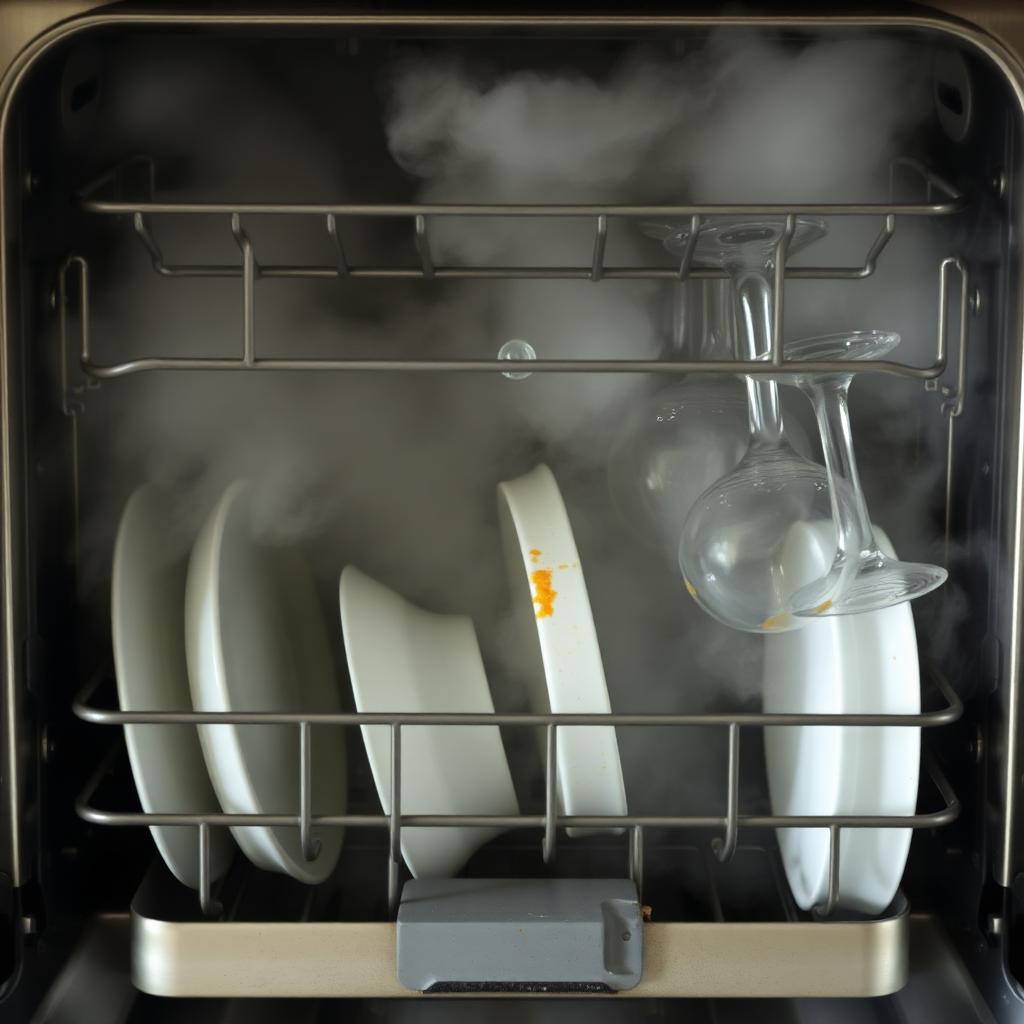
Your Whirlpool or KitchenAid dishwasher completes the entire cycle, but the dishes still come out dirty.
The detergent pod may remain partly dissolved. Food stays on the plates, glasses look cloudy, and the inside of the dishwasher does not sound as powerful as it used to.
Does this mean you need a new dishwasher?
Usually, no.
Whirlpool and KitchenAid dishwashers use a circulation pump, also called a wash pump, to push water through the spray arms. If the pump becomes weak or stops operating, the dishwasher may fill and drain normally but will not produce enough water pressure to clean the dishes.
The Issue: The Dishwasher Runs but Does Not Clean
Common symptoms include:
- Food remains on dishes after a complete cycle.
- The dishwasher fills and drains but sounds unusually quiet during washing.
- The detergent pod does not dissolve completely.
- Only the bottom or top rack is being cleaned.
- The spray arms do not appear to rotate.
- Dishes are wet but still dirty.
- The dishwasher makes a humming, grinding or buzzing noise.
- Cleaning performance becomes intermittent.
- The machine works better during some cycles than others.
A defective circulation pump is a common cause, but it should not be diagnosed before checking the filter, spray arms, loading, detergent, incoming water temperature and water level.
Whirlpool identifies blocked spray arms, incorrect loading, low water pressure, cold incoming water and dirty filters as possible reasons food remains on dishes.
How to Diagnose Poor Dishwasher Cleaning
Check how the dishes are loaded
Make sure plates and bowls face downward and inward toward the spray arms.
Avoid placing large pans, cutting boards or trays where they can block the detergent dispenser or prevent the spray arms from turning.
There should be enough space between dishes for water and detergent to reach every surface. KitchenAid recommends positioning dirty surfaces toward the spray arms and avoiding overcrowding.
Before starting the cycle, rotate each spray arm by hand. It should move freely without hitting dishes or utensils.
Clean the dishwasher filter
Remove the lower rack and inspect the filter at the bottom of the dishwasher.
Depending on the model, the dishwasher may have:
- A removable cylindrical filter
- A flat lower filter
- A foreign-object cup
- A maintenance-free filtration system
Remove food, labels, broken glass and grease buildup. Rinse removable filters under running water and use a soft brush for difficult deposits.
Whirlpool explains that regular filter cleaning helps maintain strong water flow and prevents food particles from circulating back onto the dishes.
KitchenAid uses different filter designs, so the correct cleaning procedure should be confirmed using the model number.
Inspect the spray arms
Remove or inspect the upper and lower spray arms.
Look for:
- Food blocking the spray holes
- Mineral buildup
- Cracks along the spray-arm seam
- A loose spray arm
- A damaged mounting support
- An arm that does not rotate freely
Clean blocked holes using warm water and a soft brush. Do not enlarge the openings using a drill or sharp metal tool.
A cracked spray arm may lose pressure or direct water away from the dishes. Whirlpool and KitchenAid both identify dirty or restricted spray arms as a cause of weak wash performance.
Check the incoming water temperature
Run the kitchen faucet closest to the dishwasher until the water becomes hot. Turn off the faucet and immediately start the dishwasher.
Whirlpool recommends incoming water near 120°F or 49°C for effective washing. Water that is too cold can reduce detergent performance and increase cycle time.
Do not increase the household water-heater temperature without considering burn safety and the needs of everyone in the home.
Listen to the wash cycle
Start a Normal or Heavy cycle.
After the dishwasher fills, listen for a strong rushing or spraying sound.
A normal circulation pump should produce noticeable wash action. A problem is more likely when:
- The dishwasher fills and then becomes very quiet.
- You hear only a low electrical hum.
- The wash sound starts and stops unexpectedly.
- The pump makes grinding or rattling noises.
- The dishwasher drains normally but produces very little spraying noise.
Pause the dishwasher and wait for the spray action to stop before opening the door.
Check whether the dishes and interior walls are thoroughly wet. If there is water in the bottom but very little water on the dishes, the circulation pump or wash system may not be producing enough pressure.
The circulation pump’s job is to force water through the wash arms. A defective pump can cause noise and poor cleaning performance.
Check the water level
A dishwasher cannot clean properly without enough water.
If the dishwasher appears to have very little water, possible causes include:
- Partially closed water valve
- Kinked supply hose
- Restricted inlet screen
- Weak water inlet valve
- Low household water pressure
- Main control problem
KitchenAid states that insufficient water pressure can affect cleaning and specifies a recommended supply pressure of 20–120 psi for applicable models.
The Likely Solution
If the filter and spray arms are clean, the dishwasher fills with enough hot water, and the wash action remains weak or absent, the circulation pump becomes a strong suspect.
A technician should test:
- Circulation-pump motor
- Pump impeller
- Pump electrical connections
- Voltage supplied to the pump
- Wiring harness
- Sump and filter system
- Diverter system, when equipped
- Main control-board output
Some Whirlpool and KitchenAid dishwashers use a separate circulation motor. Others require replacement of a larger pump-and-sump or motor assembly.
The correct component must be identified using the complete model number. Whirlpool and KitchenAid use many different circulation pumps, even in dishwashers that appear nearly identical.
Technician’s Recommendation: Repair or Replace?
As an appliance technician, I normally recommend repairing a Whirlpool or KitchenAid dishwasher when the circulation pump is the only major failure.
Most customers choose the repair because replacing a dishwasher can cost two or three times more after including:
- The new dishwasher
- Delivery
- Installation
- Removal of the old appliance
- Plumbing connections
- Electrical work
- Cabinet modifications
A failed circulation pump does not mean that the tub, racks, controls and entire dishwasher are finished.
Repair is usually recommended when:
- The dishwasher is otherwise in good condition.
- There are no major leaks.
- The racks and tub are not badly damaged.
- The correct pump is available.
- The dishwasher does not have several additional failures.
For older KitchenAid dishwashers, the repair may still be worthwhile because replacement models can be expensive and installation may add significantly to the final cost.
Circulation-Pump Repair Prices
The final price depends on the model, pump design and whether the motor is available separately or only as part of a larger assembly.
Typical pricing may include:
- Circulation pump or wash motor: approximately $180–$450
- Professional diagnosis and labour: approximately $220–$280
- Estimated complete repair: approximately $400–$730
A complete sump-and-motor assembly may cost more.
Current OEM parts listings show that Whirlpool and KitchenAid use circulation pumps at several price levels, with the exact component determined by the model number.
These are general Canadian estimates before taxes, travel charges or additional repairs.
Models This Problem May Affect
This general diagnosis applies to many Whirlpool and KitchenAid dishwasher families, including:
- Whirlpool WDF series
- Whirlpool WDT series
- Whirlpool WDTA series
- KitchenAid KDFE series
- KitchenAid KDTE series
- KitchenAid KDTM series
- KitchenAid KDFM series
Not every model uses the same circulation pump. The model label is usually located along the side of the dishwasher door or around the tub opening.
Book a Dishwasher Repair
If your Whirlpool or KitchenAid dishwasher fills and drains but does not clean, begin by checking the loading, filter, spray arms and incoming water temperature.
If the dishwasher remains unusually quiet during the wash cycle or produces very weak spray pressure, the circulation pump may need replacement.
TrustedFix Appliance Repair can test the circulation pump, water inlet system, spray arms, sump, diverter, wiring and control board before recommending a repair.
In many cases, replacing a failed circulation pump is significantly less expensive than purchasing and installing a new dishwasher.
Related service
Need a technician?
We handle appliance repair across Metro Vancouver and the Lower Mainland. Same-day service usually available.